
Share on twitter
Share on facebook
Share on pinterest
Share on email

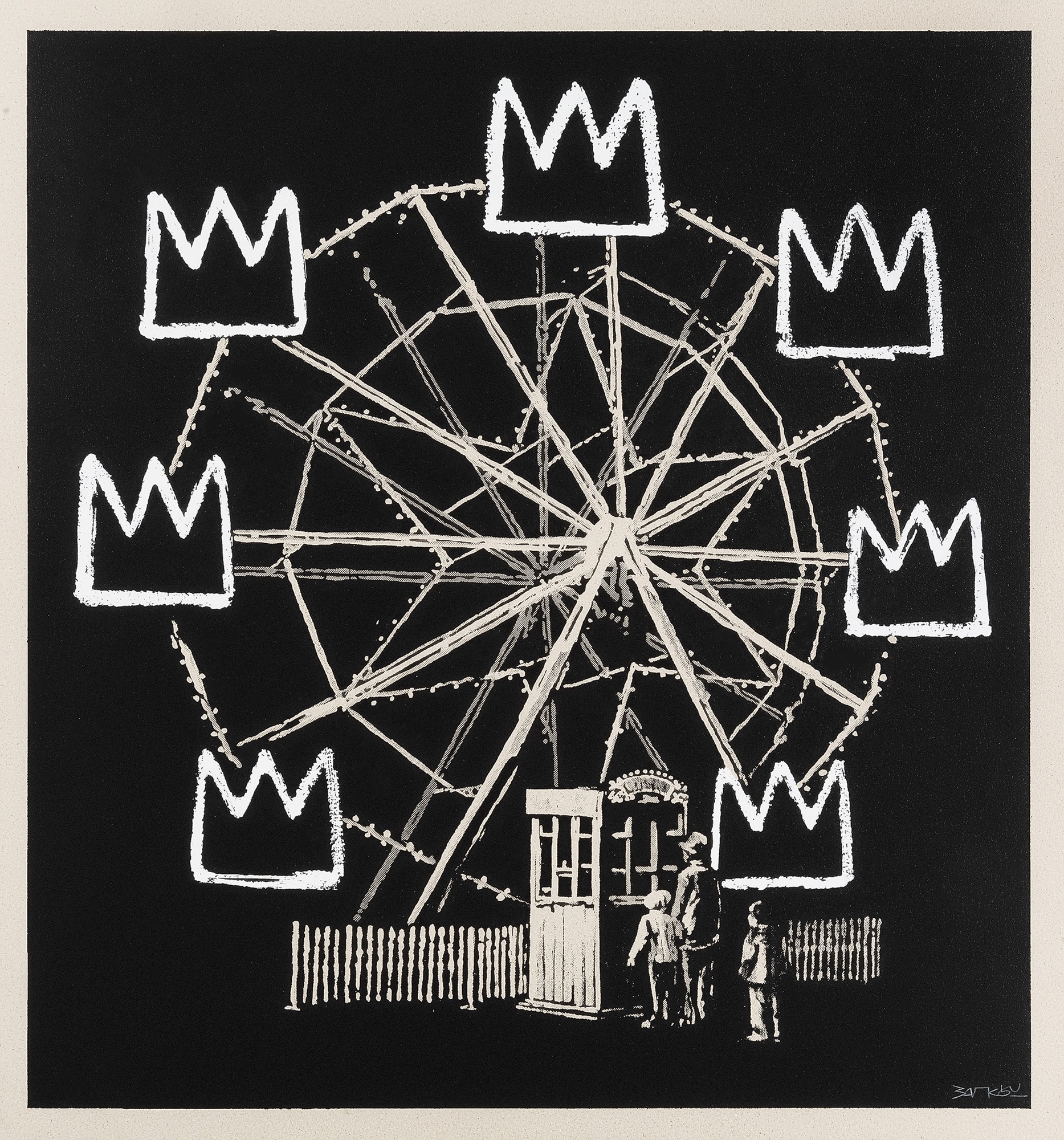
Banksquiat, 2019

BY
Banksquiat (Grey), 2019
Edition: 300 signed

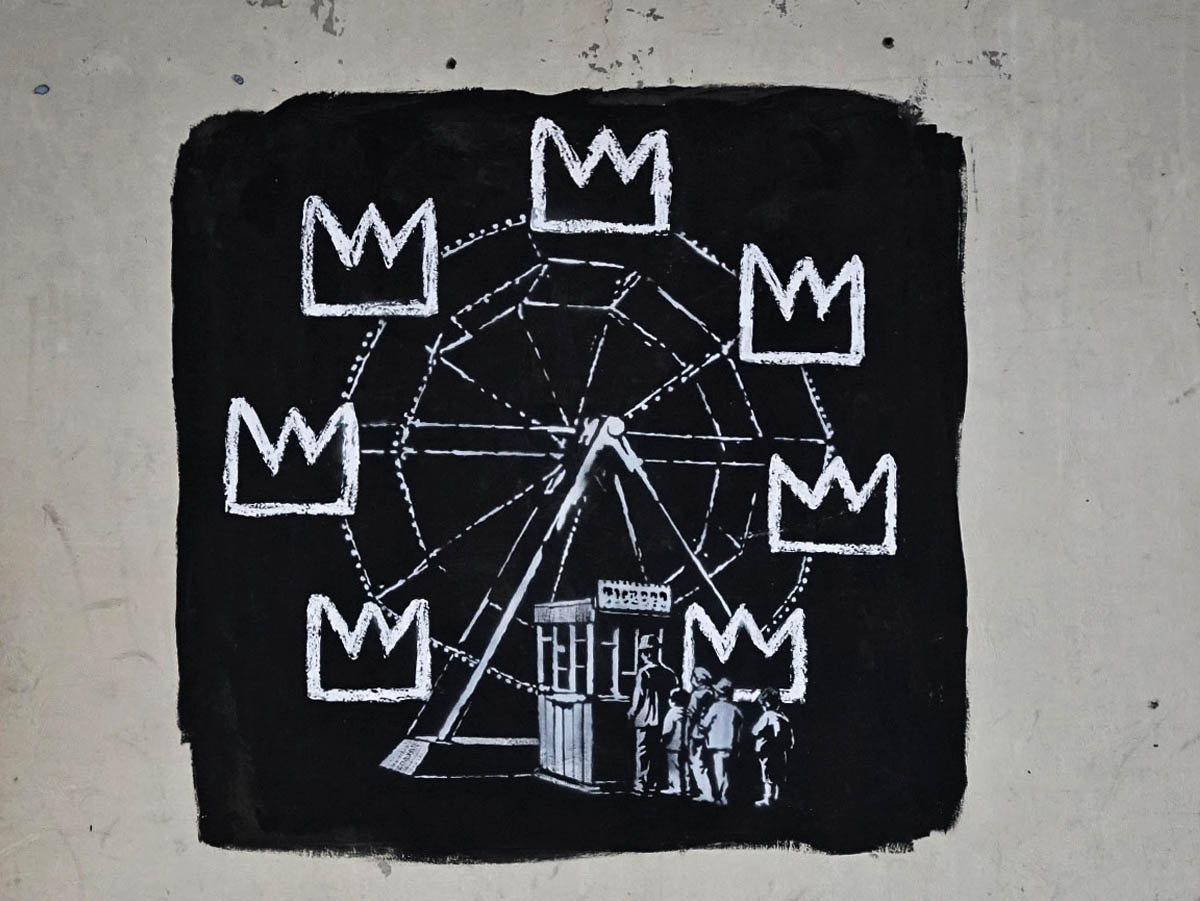
In this homage to Basquiat, Banksy offers a mirror to his own practice of appropriation as well as that of the endless wheel of capitalism and consumerism in which masterpieces are massively reproduced on tee shirts or rehashed for advertising campaigns.
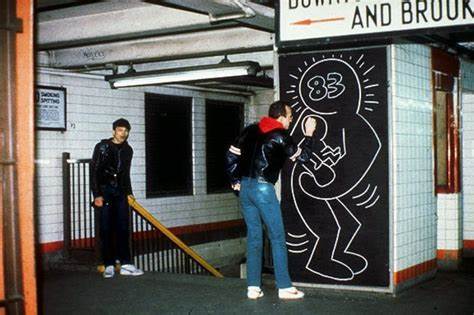
Banksquiat depicts a Ferris wheel in which all the carriages have been replaced by Basquiat’s famous crown motif. By referencing Basquiat so openly, Banksy seems to be aligning himself with the tradition of street art as high art, which arguably has its origins in the work of Basquiat whose career was launched by his many interventions in the urban environment. Banksy makes further reference to street art history by choosing to print his design in grey with the crowns outlined in a chalky white against a black ground. This clearly refers to another icon of street, Keith Haring, who started his career with a series of subway drawings, rendered in chalk on empty advertising panels in the New York Metro system.
 

Banksquiat comments on the excesses of late capitalism that allows artworks to be commodified. At the same time, there is a paradox at play; in order for art to be accessible to all – which is perhaps central to Banksy’s mission as an artist, as well as that of Haring and even also Basquiat – art must be reproduced and shared rather than held ransom by a handful of the elite who own the original artwork or the intellectual property. In this way, Banksy cleverly comments on, as the original website description puts it, “the relentless commodification of Basquiat in recent times – by crassly adding to the relentless commodification of Basquiat in recent times.”

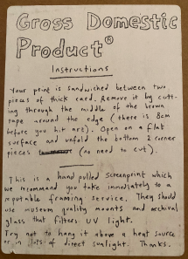
This commodification of artworks was exemplified by the opening of Gross Domestic Product itself, which began life as a showroom in Croydon in October 2019, intended to publicize the launch of a new online Banksy “homewares brand.” While thousands of fans attempted to buy something from the store, many were disappointed as they found that GDP did not operate as a traditional retail model but instead required the prospective buyer to enter a lottery system in order to acquire one of the products. In this way, Banksy opened the floodgates to the commodification of his own work while still retaining a certain amount of control over who his primary sales went to.
Banksquiat (Black), 2019
Edition: 300 signed

DESCRIPTION


Banksquiat

Year: 2019
Medium: Screen-print on black or grey board
Size: 70×70 cm (27 1/2 x 27 1/2 inches)
Publisher: Banksy, Gross Domestic Product

Editions

Banksquiat (Black): 300 signed
Banksquiat (Grey): 300 signed

AUCTION RESULTS


Updated as of 30 June 2022

Banksquiat was initially sold in the primary market through Gross Domestic Product, against a commitment not to sell in the secondary market for three years. Pest Control Office has now issued Certificates of Authenticity for those works. 

Banksquiat sold twice at auction so far in 2022.
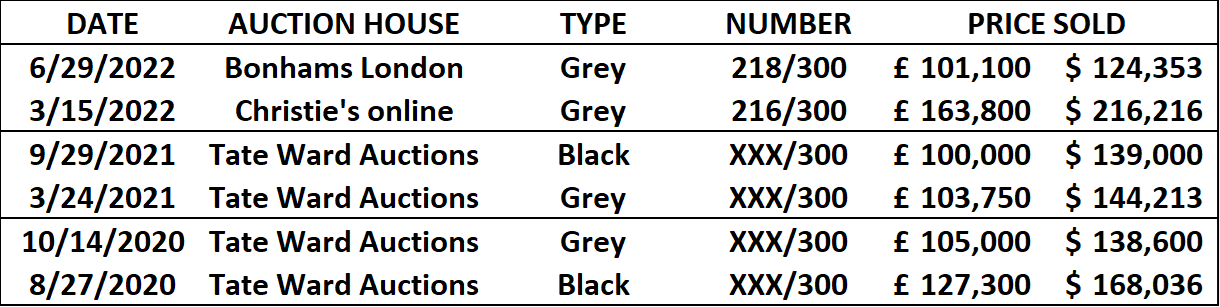


Banksquiat (Grey), 2019
Signed in white crayon, lower right
Numbered 218/300 in white crayon, lower left
Bonhams London, 29 June 2022
GBP 101,100 / USD 124,353

Banksquiat (Grey), 2019
Signed in white crayon, lower right
Numbered 216/300 in white crayon, lower left
Christie’s online, 15 March 2022
GBP 163,800 / USD 216,216


Banksquiat (Black), 2019
Signed and numbered XXX/300
Tate Ward Auction, 29 September 2021

GBP 100,000 / USD 139,000


Banksquiat (Grey), 2019
Signed and numbered XXX/300
Tate Ward Auction, 24 March 2021
GBP 103,750 / USD 144,213