Love Is In The Air
Exhibition History
Auction History
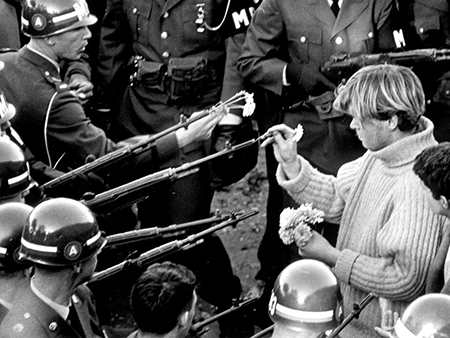
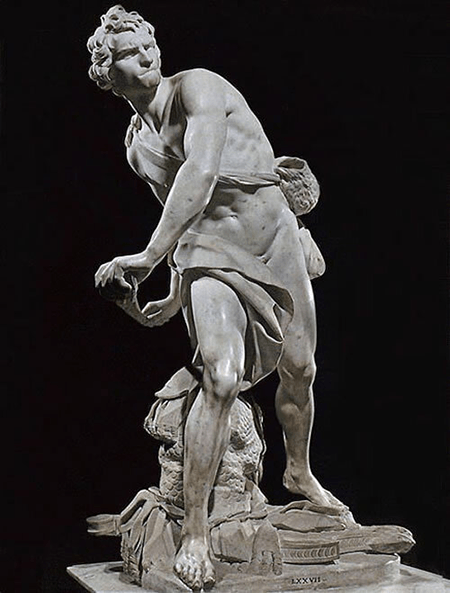
Image: © Vanni Archive / Art Resource, NY

Variations Sold at Auction
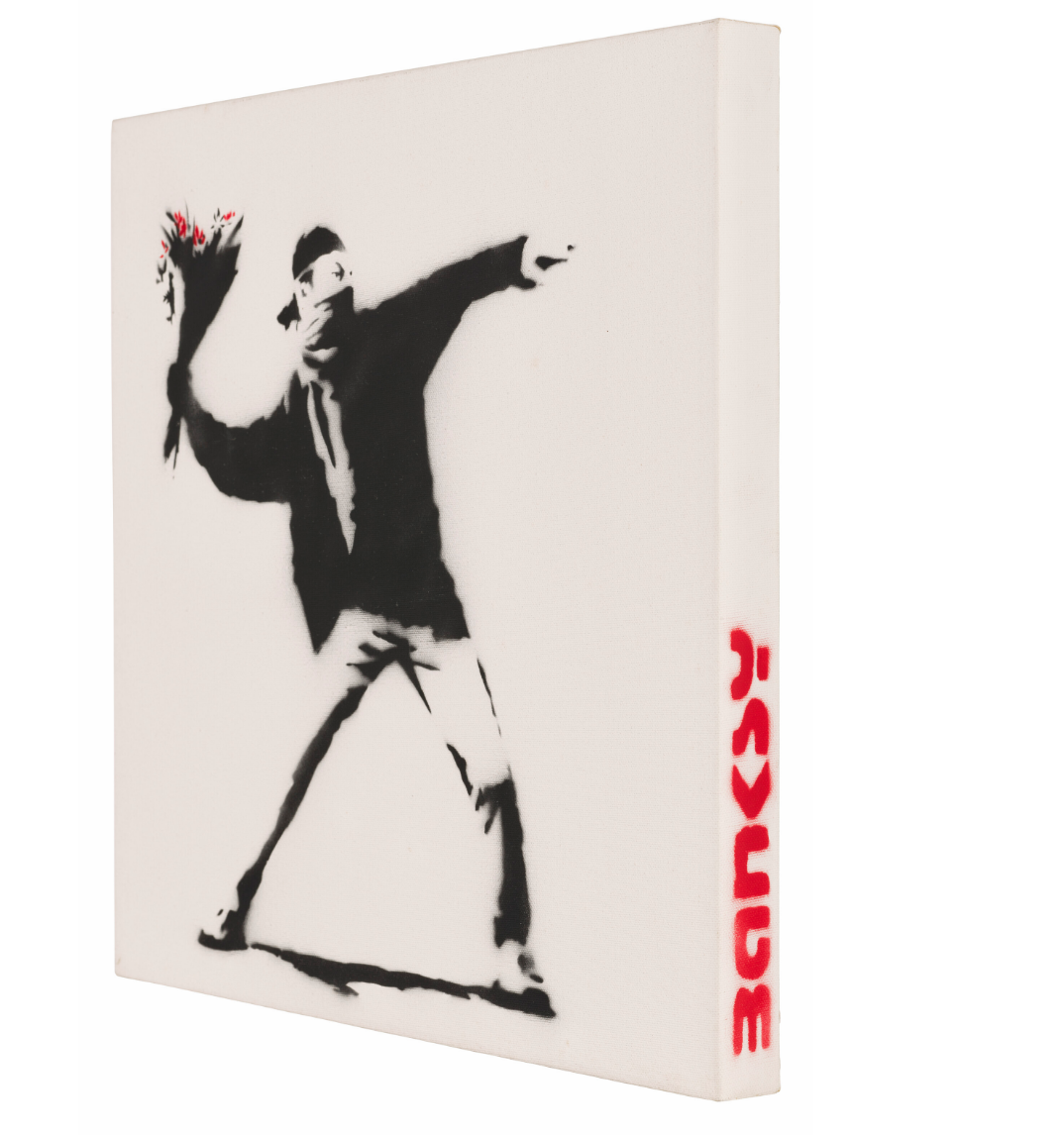
Love is in the Air
Year: 2002
Medium: Spray-paint on canvas
Dimensions: 43.2 x 43.2 cm (17×17 inches)
Edition: Variant outside of an edition of 5
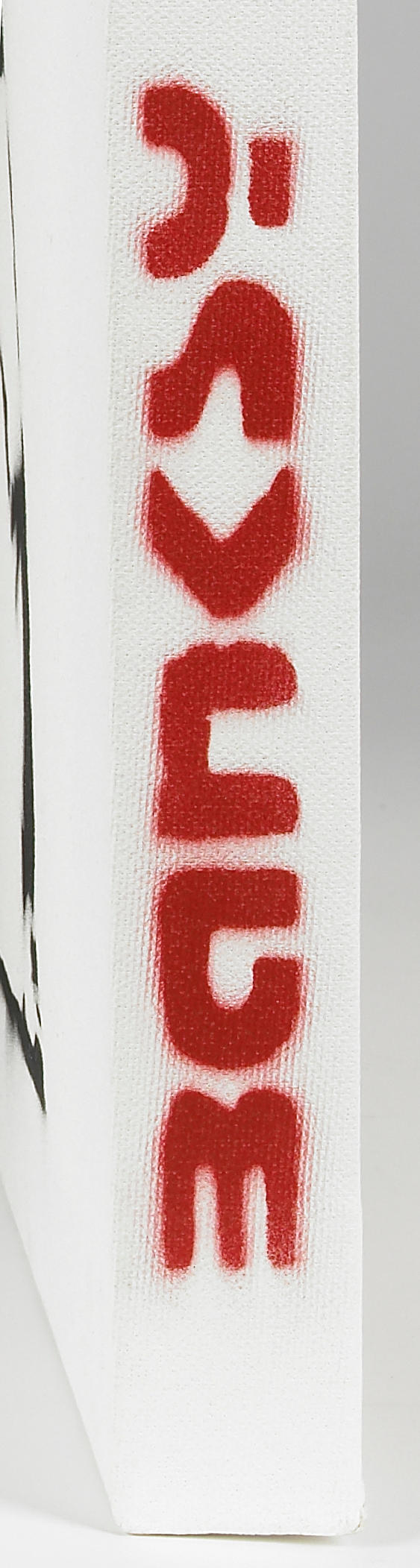
Tagged ‘BANKSY’ (on the turnover edge)
Signed, inscribed and dated ‘Banksy LA 2002 EXTRA SQUARE 1/1’ (on the stretcher)
Auction History
Auction House: Christie’s
Date: 2 March 2022
Price realized: GBP 978,000
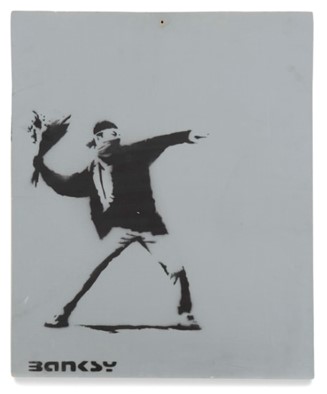
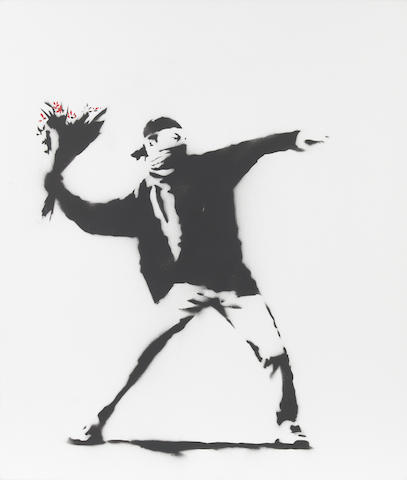
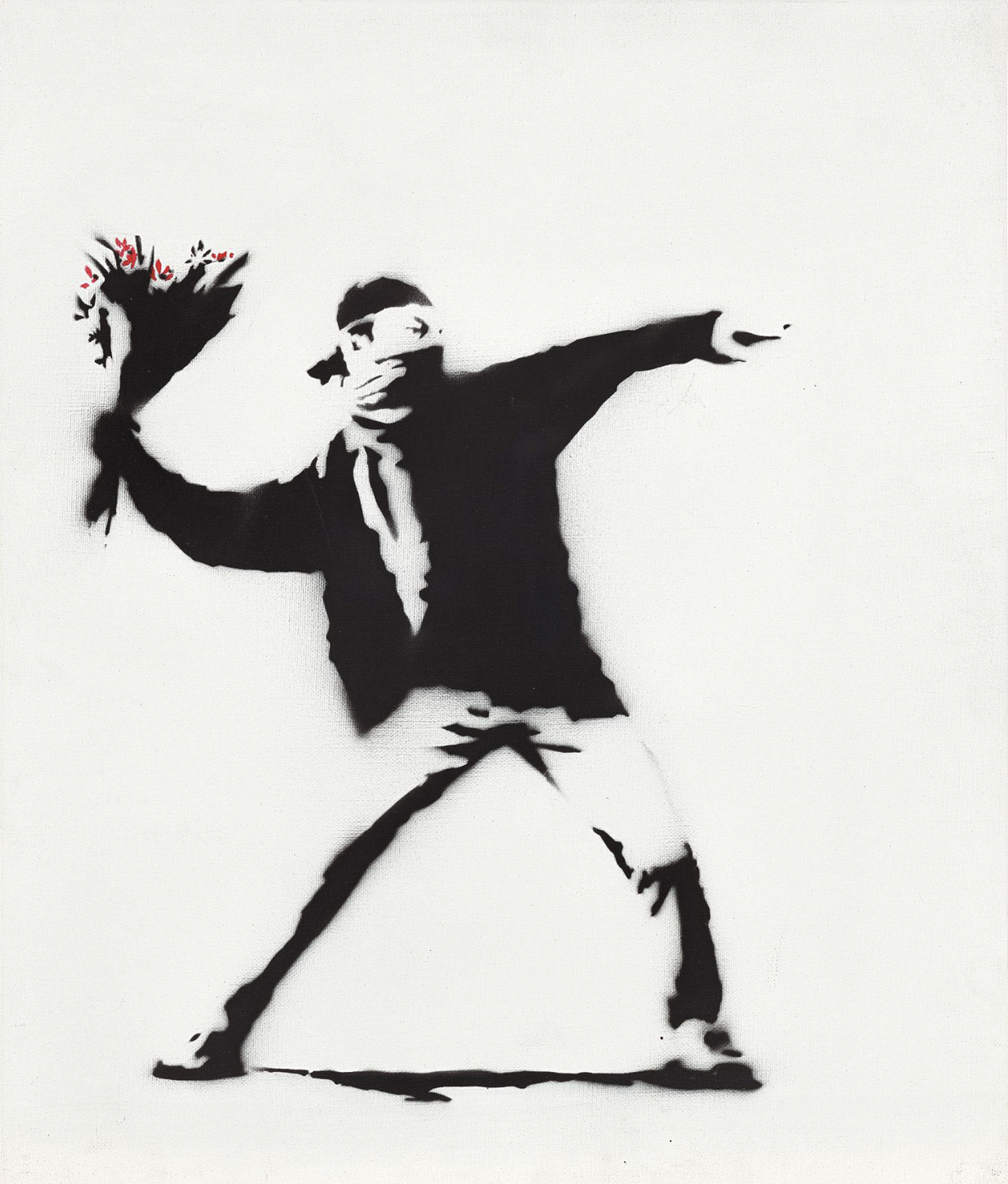
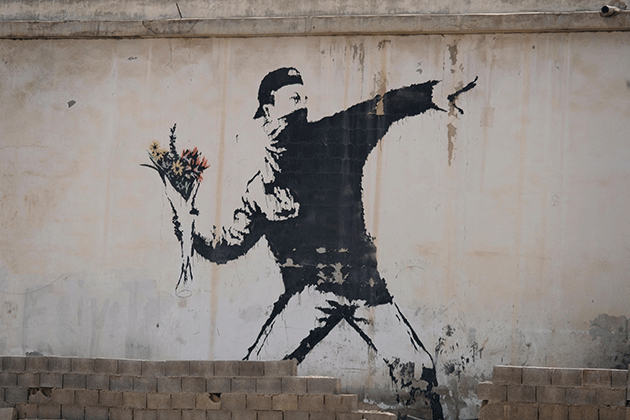
Standing among Banksy’s most celebrated images, Love is in the Air is an early iteration of his seminal ‘flower thrower’ motif. The work dates from 2002, three years before the seminal mural first appeared on the side of a garage near the newly-erected West Bank barrier wall. Offering a poignant response to the Israeli-Palestinian conflict, it was this image that cemented Banksy’s position on the international stage, establishing him both as an artist and as an activist. The masked insurrectionist—armed not with weaponry but rather with a floral bouquet—has since become a twenty-first-century icon, representing a universal image of peace and reconciliation. Over time, moreover, he has come to operate as an extension of Banksy himself, encapsulating the anonymous, non-violent insurgence that defines his urban interventions. Uniquely rendered using a hand-cut stencil and reproduced on the cover of his seminal 2005 book Wall and Piece, the work shares its title with the 1978 John Paul Young hit, injecting its message with a characteristic note of tongue-in-cheek wit. As the conflict continues—most recently escalating with a renewed outbreak of violence in 2021—the image endures like a beacon, offering hope to those across the world whose lives have been overturned by war.
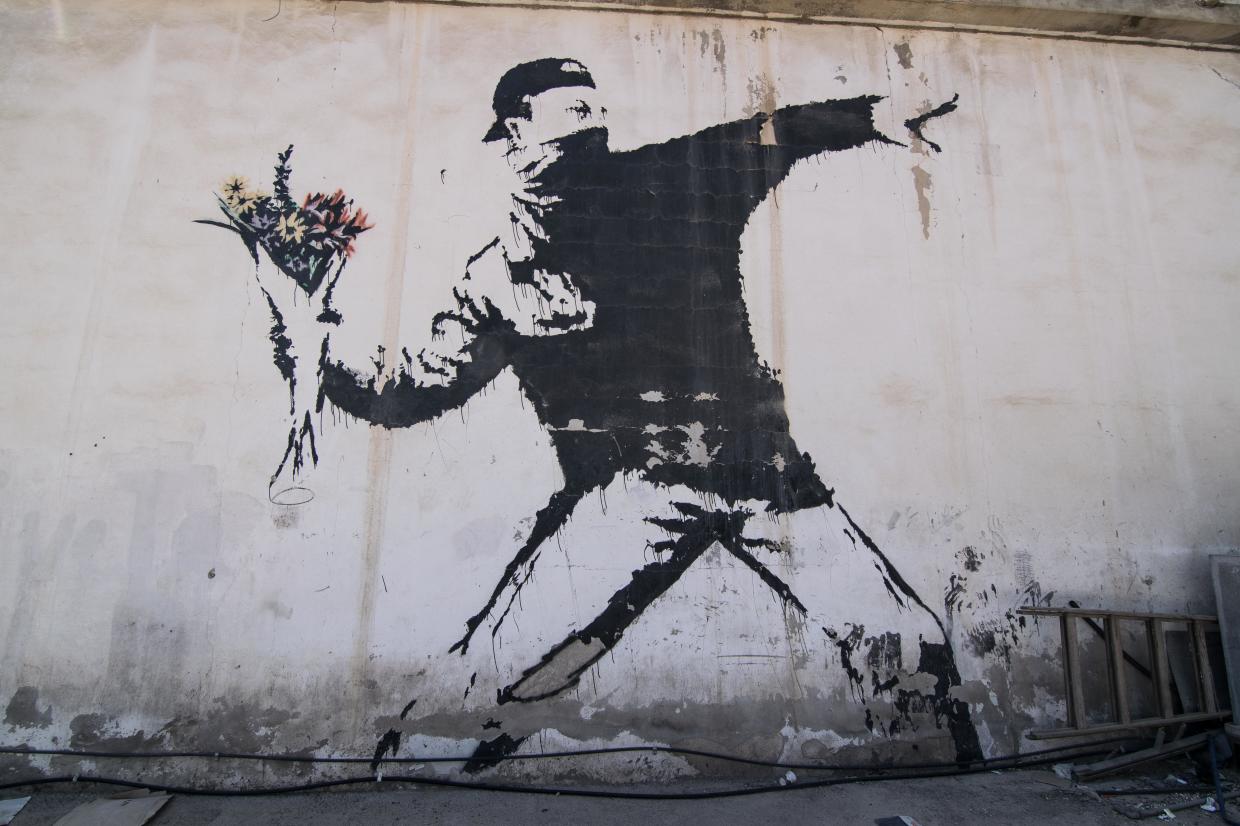
Flower Thrower, Beit Sahour
Like Pablo Picasso’s Guernica, William Hogarth’s engravings, Andy Warhol’s silkscreens and Grayson Perry’s ceramic pots, Banksy’s works are powerful reflections of his zeitgeist. Unlike many of his predecessors, however, his creations are fundamentally conceived as actions: as interventions and disruptions that aspire to bring about change. The ‘flower thrower’ set in motion an idea that would become central to Banksy’s practice: namely, that art should belong to the people it represents, and—like the hurled bouquet itself—should circulate freely within the world.
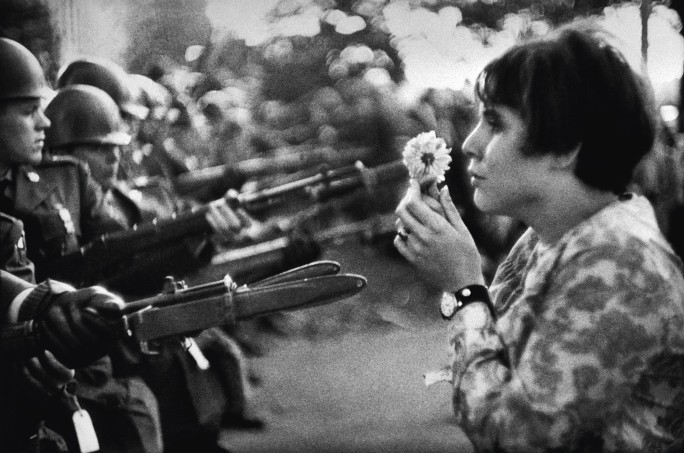
The choice of flowers, over a brick or hand grenade, is significant, evoking the sentiment of the Flower Power movement and the associated anti-war demonstrations in America during the 1960s. Images from the time show protestors offering flowers to military police, and—in a landmark Pulitzer Prize-nominated photograph of 1967—placing carnations inside their rifle barrels. Banksy’s work operates in a similar vein: despite its anarchic edge, its mission is ultimately one of outreach, sending sparks of joy and comfort to local communities, and timely warnings to those in positions of power.
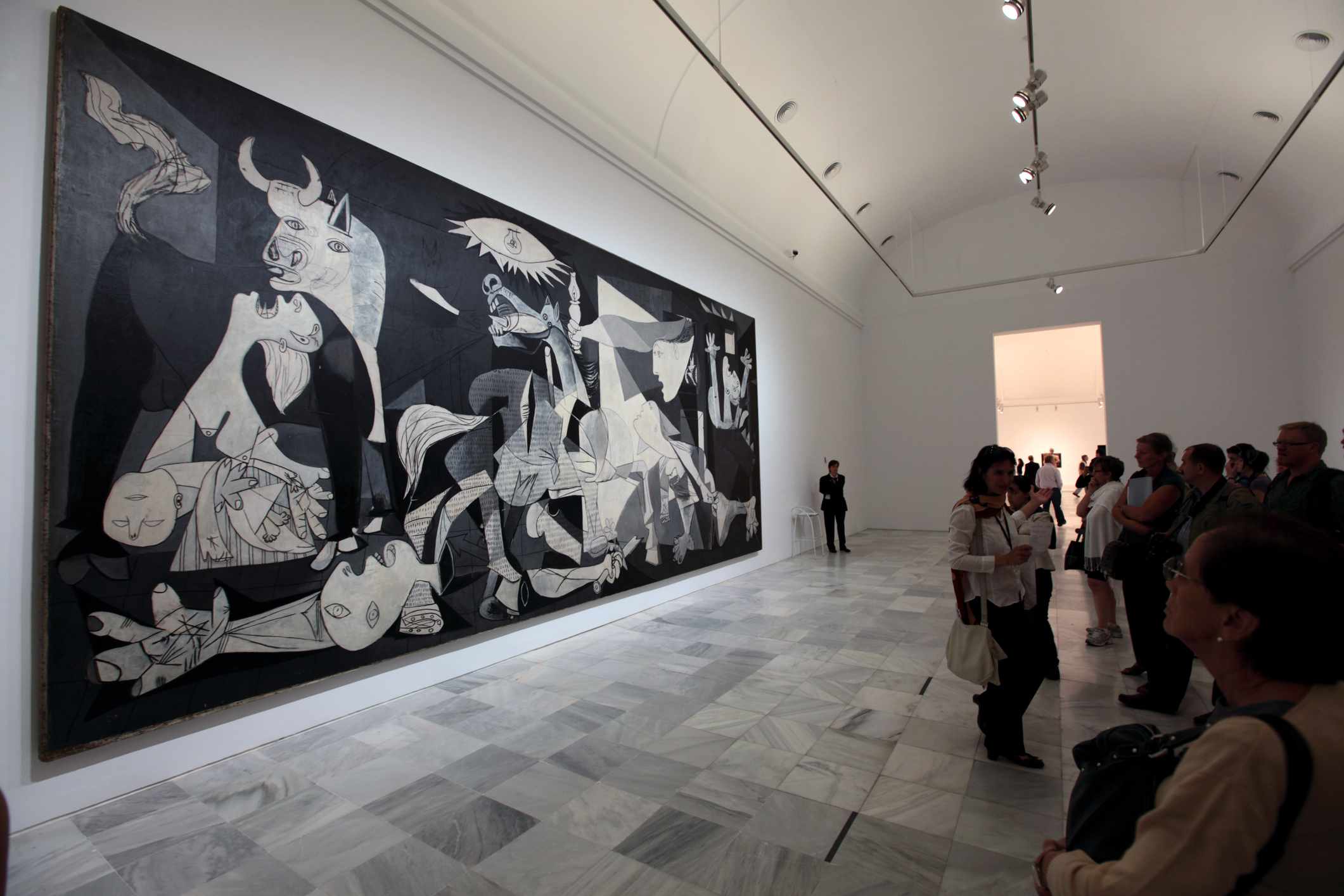
Pablo Picasso, Guernica, 1937
Since Love is in the Air, the West Bank barrier wall has become a site of particular focus for Banksy. Over the years, multiple works have sprung up in the region: notably his 2005 take on his iconic Girl with Balloon, depicting a young girl being lifted over the wall by a bunch of balloons. In 2017, Banksy designed the Walled Off Hotel with a view of the barrier, in an attempt to boost tourism in the area while simultaneously highlighting the ongoing conflict. The location of Love is in the Air, however—a town called Beit Sahour, just east of Bethlehem—holds deeper significance still. In Christian tradition, it is said to be the site of the Annunciation to the shepherds, which told them of the birth of Jesus. Interestingly, the pose of Banksy’s protagonist is perhaps reminiscent of the angel statue outside the town’s Shepherds’ Fields Chapel, whose arm similarly reaches into the distance. In Love is in the Air, Banksy makes a case for ongoing hope in a region that once bore tales of miracles and salvation, his protagonist pointing eternally towards the future.
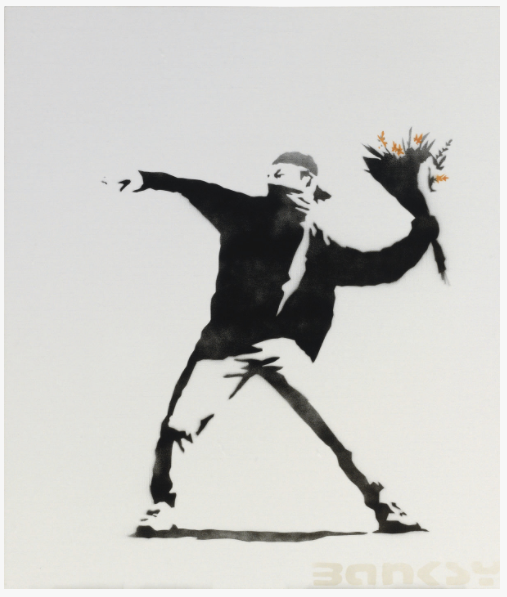
Love Is In The Air
Auction History